CALCIFEDIOL SCIENCE
Understand calcifediol through its metabolic pathway.
Calcifediol occupies a key step in Vitamin D metabolism. Follow its source, conversion and utilization to understand how it forms, how it is measured and how it connects to later physiological processes.
Source
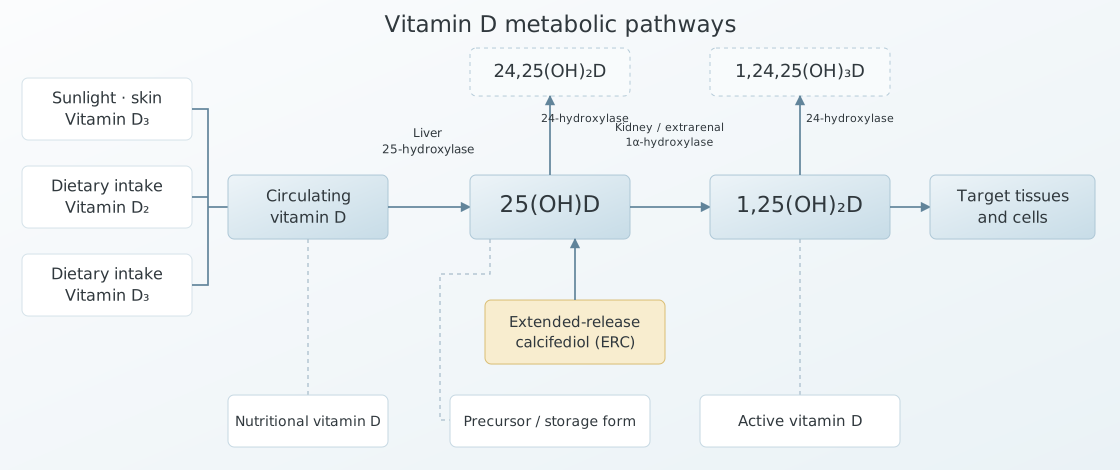
Calcifediol is 25-hydroxyvitamin D₃ [25(OH)D₃], formed mainly by conversion of Vitamin D₃ in the liver. Skin synthesis, food and supplements affect its upstream supply, but sunlight does not produce calcifediol directly. Calcifediol as a medicine also involves specific formulations and approved uses, distinct from ordinary nutritional supplementation.
Conversion
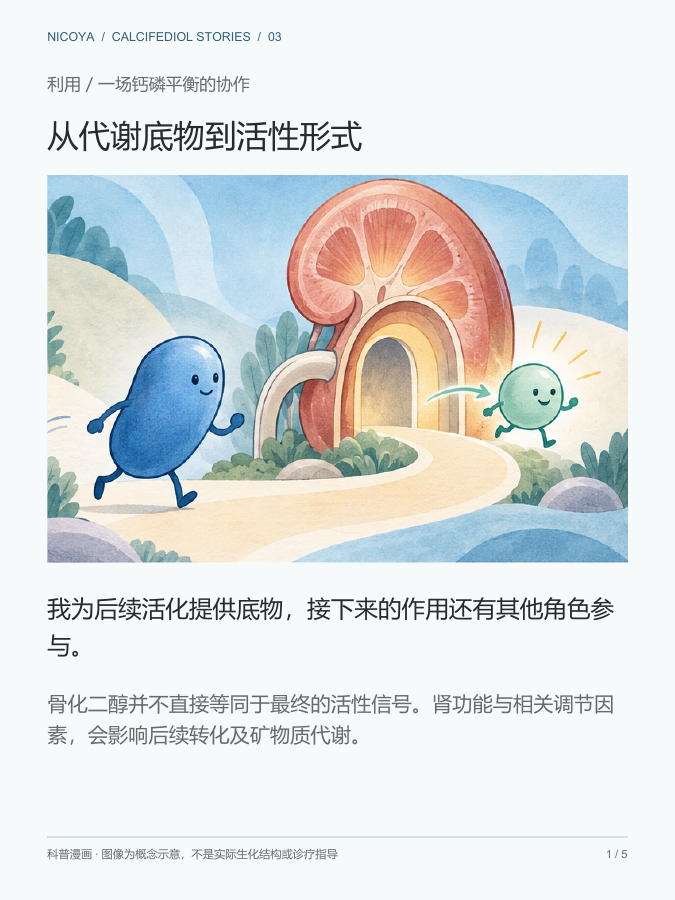
Calcifediol formed in the liver is the main circulating form of Vitamin D₃ and a precursor for further activation. The enzyme 1α-hydroxylase in the kidneys and extrarenal tissues converts it into biologically active calcitriol [1,25-(OH)₂D₃]. Serum total 25(OH)D is the main marker of Vitamin D status and usually combines the 25-hydroxylated forms of D₂ and D₃, rather than measuring calcifediol alone.
Utilization
After further activation, calcifediol gives rise to calcitriol, which binds to Vitamin D receptors in target cells and regulates gene expression involved in calcium-phosphate balance, bone metabolism and immune regulation. Serum calcifediol status, tissue metabolism and clinical outcomes are distinct layers of evidence. Kidney function, calcium, phosphate, hormones and individual context affect interpretation, and higher is not always better.